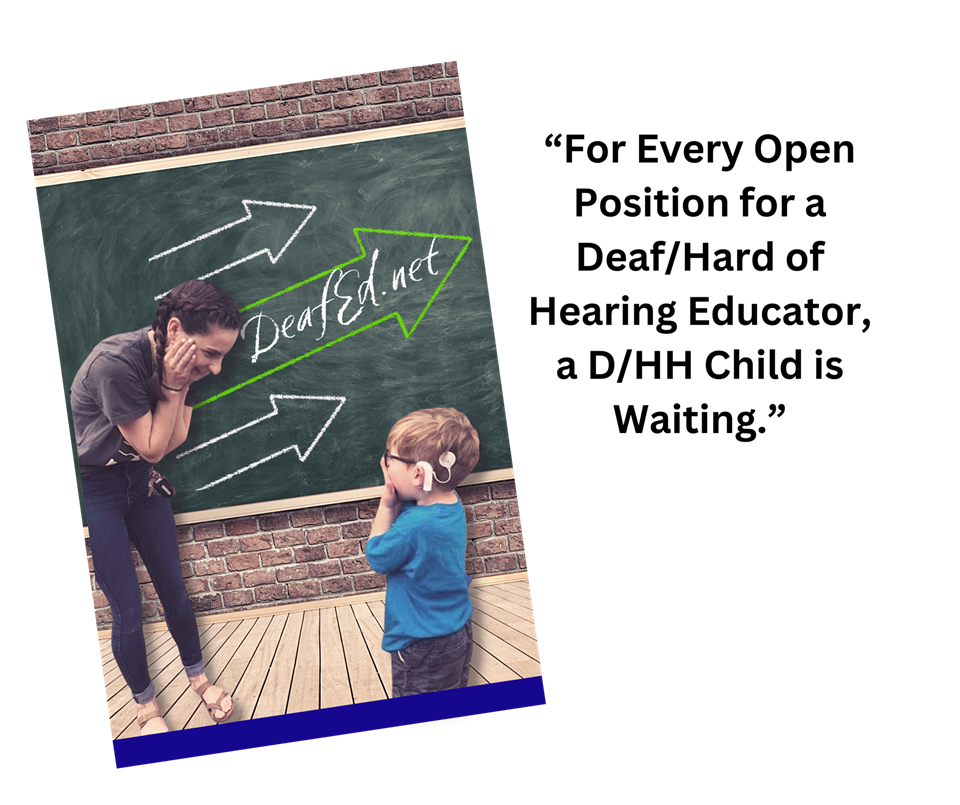
Since 2003 DeafEd.net has been dedicated to the field of Deaf Education by ensuring students who are Deaf and Hard of Hearing (D/HH) have access to educational professionals who are highly trained to meet the unique needs of D/HH children.
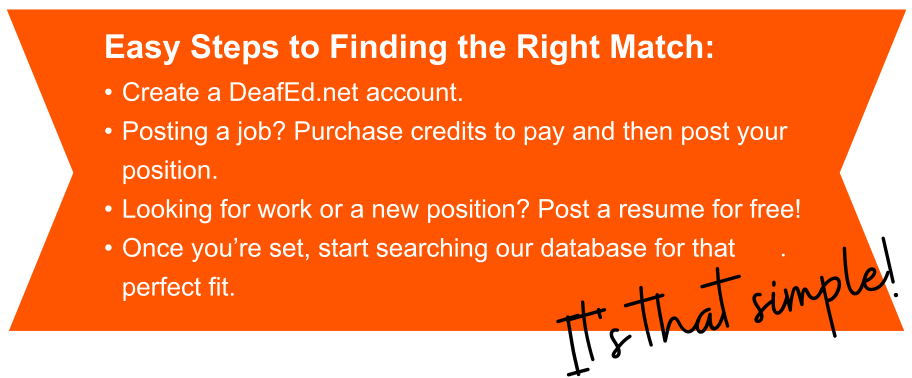
How do we do this? DeafEd.net is a platform solely designed to bring together program administrators serving D/HH students and professionals looking for positions, so they can post job openings and resumes, find each other, and get to the business of helping our D/HH students.
We are also committed to maintaining an updated list of deaf education teacher programs. Check that out here.
Interested in the rich history of DeafEd.net? Visit here.
NASDSE Guidelines- Are you struggling to design services for your deaf and hard of hearing students? Do you want to identify areas to improve?
The National Association of State Directors of Special Education (NASDSE) published the third edition of the Educational Service Guidelines, Optimizing Outcomes for Students who are Deaf or Hard of Hearing. These are available at https://deafedguidelines.org or http://www.nasdse.org/docs/nasdse-3rd-ed-7-11-2019-final.pdf
And be sure to explore the many Hands & Voices resources, products, and services relevant to the field of deaf education here.
Questions? Contact: Candace Lindow-Davies, Project Manager & Director of Outreach for Hands & Voices HQ
Hands & Voices is proud to host DeafEd.net. Hands & Voices is a parent-driven organization that supports families with children who are Deaf or Hard of Hearing (D/HH) without a bias around communication modes or methodology. For more information, visit: www.handsandvoices.org.